
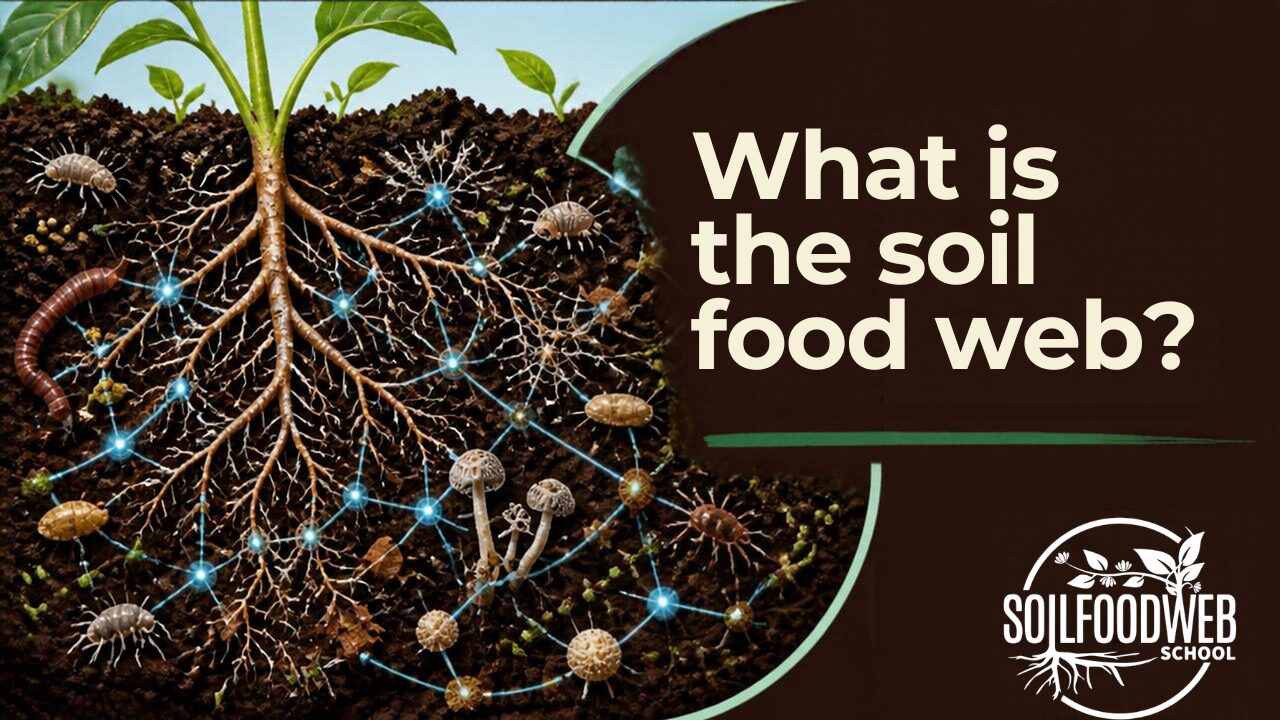
Plants may feed us but can’t produce all the nutrition they need on their own. Through their roots, they release sugars and other compounds that attract and feed a community of microorganisms — and in return, that community delivers nutrients, builds structure, and defends its host. This web of eating and being eaten is what makes soil function.
How the soil food web works
Healthy soil is a living system. Billions of organisms — bacteria, fungi, protozoa, nematodes, and microarthropods — form a web of relationships with plants that feeds them, builds the soil around them, and protects them. Here’s how it works.
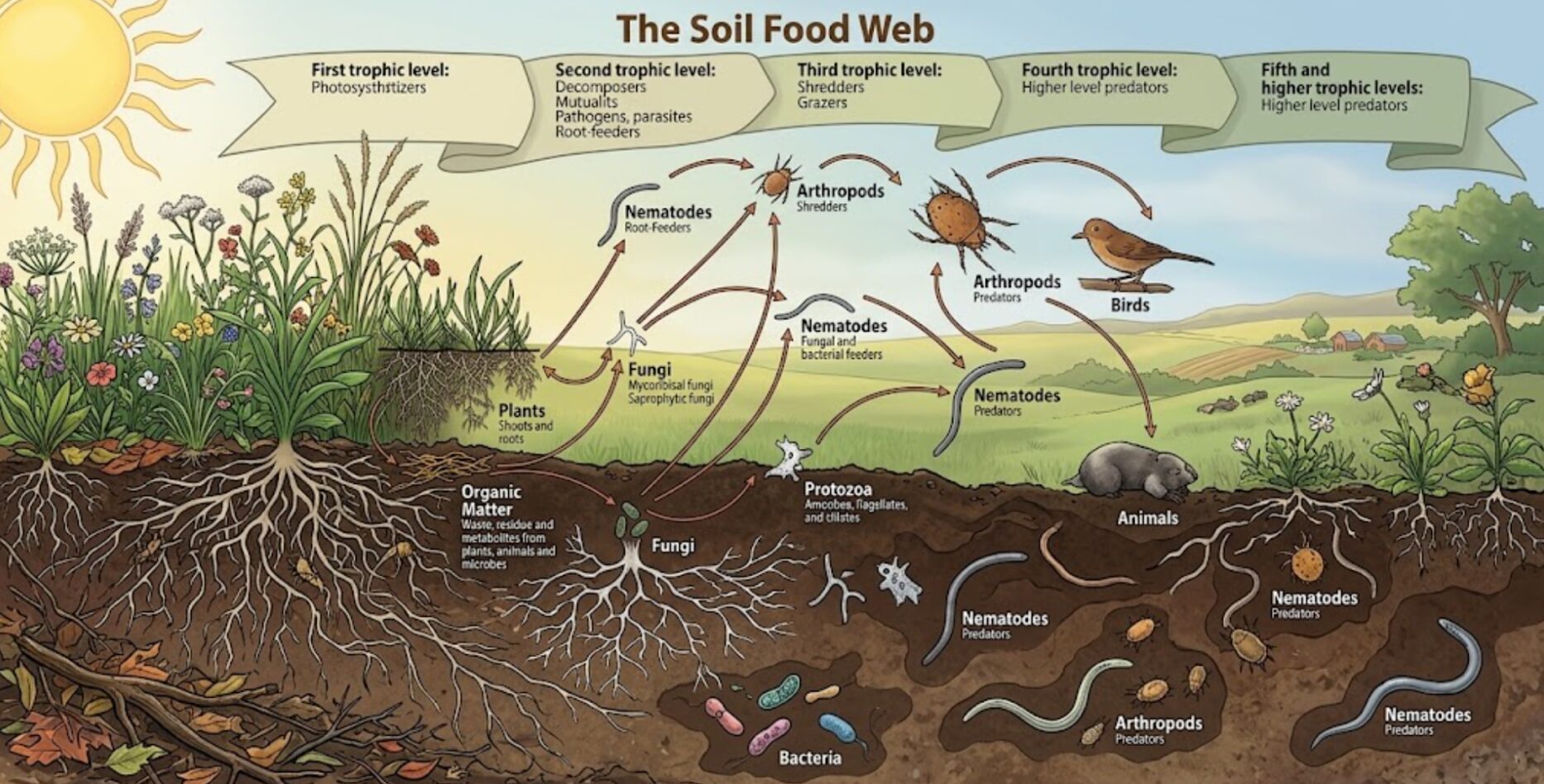
The soil food web
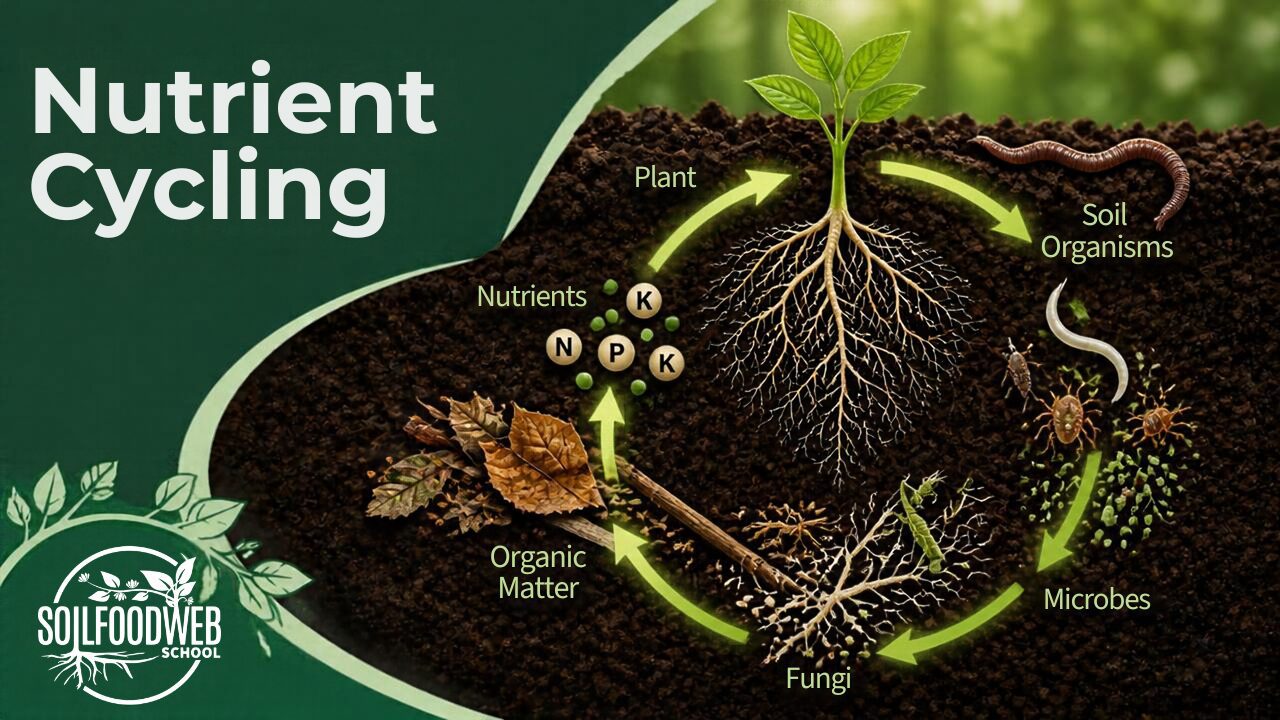
Nutrient cycling
A plant invests 30–40% of the sugars it makes through photosynthesis into the soil to feed microbes. Bacteria and fungi produce enzymes that break down minerals and organic matter, unlocking the nutrients they contain. When protozoa and nematodes consume those bacteria and fungi, the surplus is released right at the root — in plant-available form. The plant controls the exchange, drawing what it needs, when it needs it.
Building soil structure
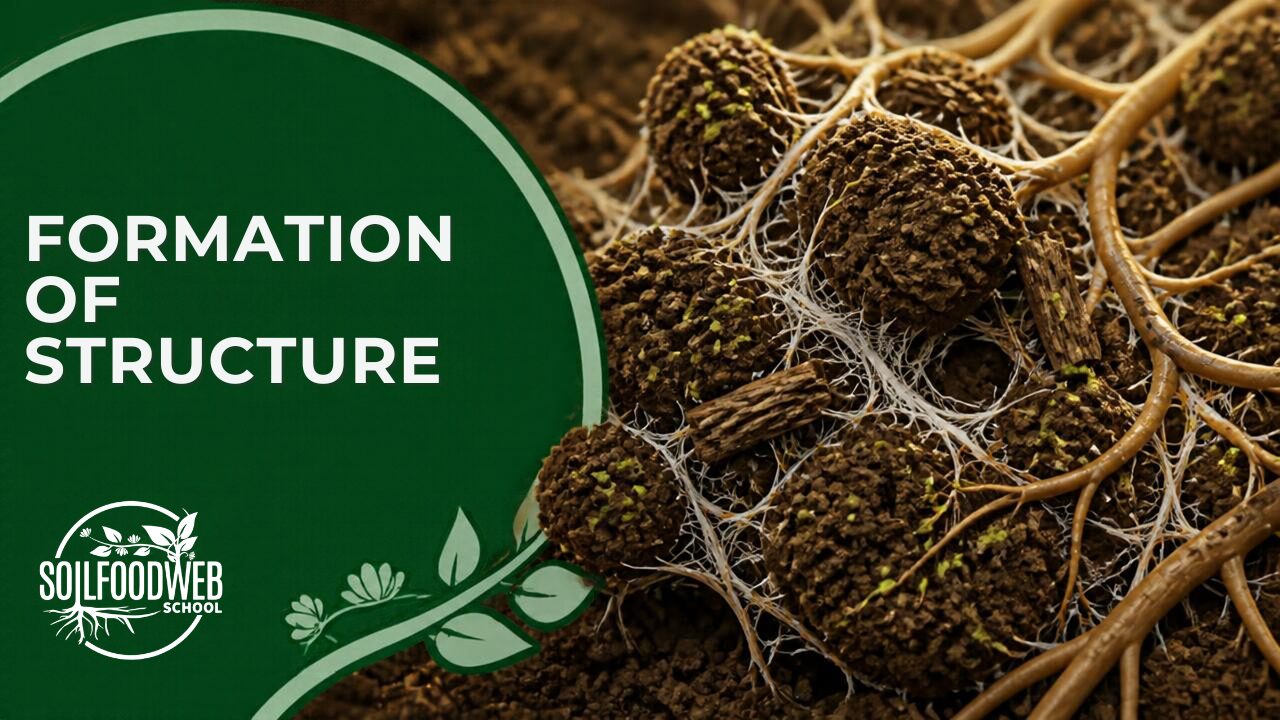
Beneficial bacteria produce glues that bind soil particles into microaggregates; fungal hyphae weave those into larger macroaggregates. The result behaves like a sponge — holding water for extended periods, letting air flow in, resisting erosion by wind and rain, and reducing the need for irrigation.
Suppressing weeds
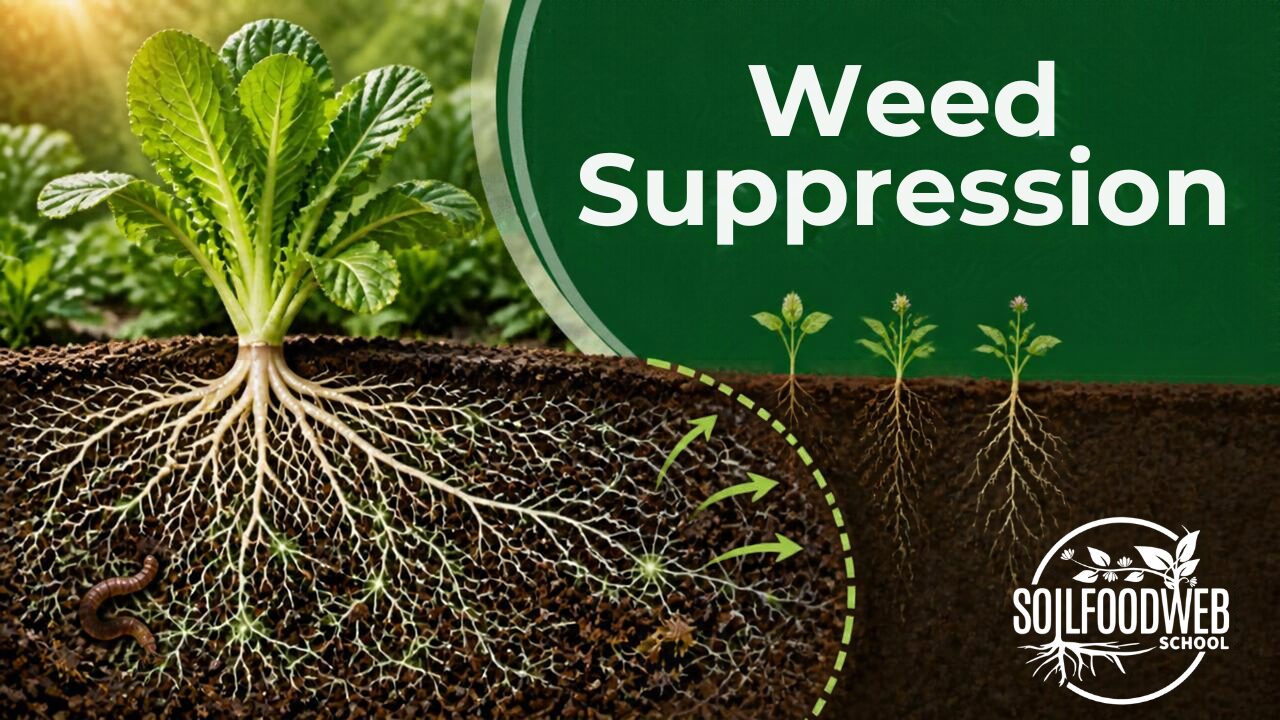
Beneficial fungi secrete enzymes that gradually acidify their surroundings, slowing the bacteria that convert nitrogen into nitrate — the form many fast-growing weeds depend on. As the fungal community establishes, conditions shift to favor the plants you’re growing.
Protecting plants from pests and disease
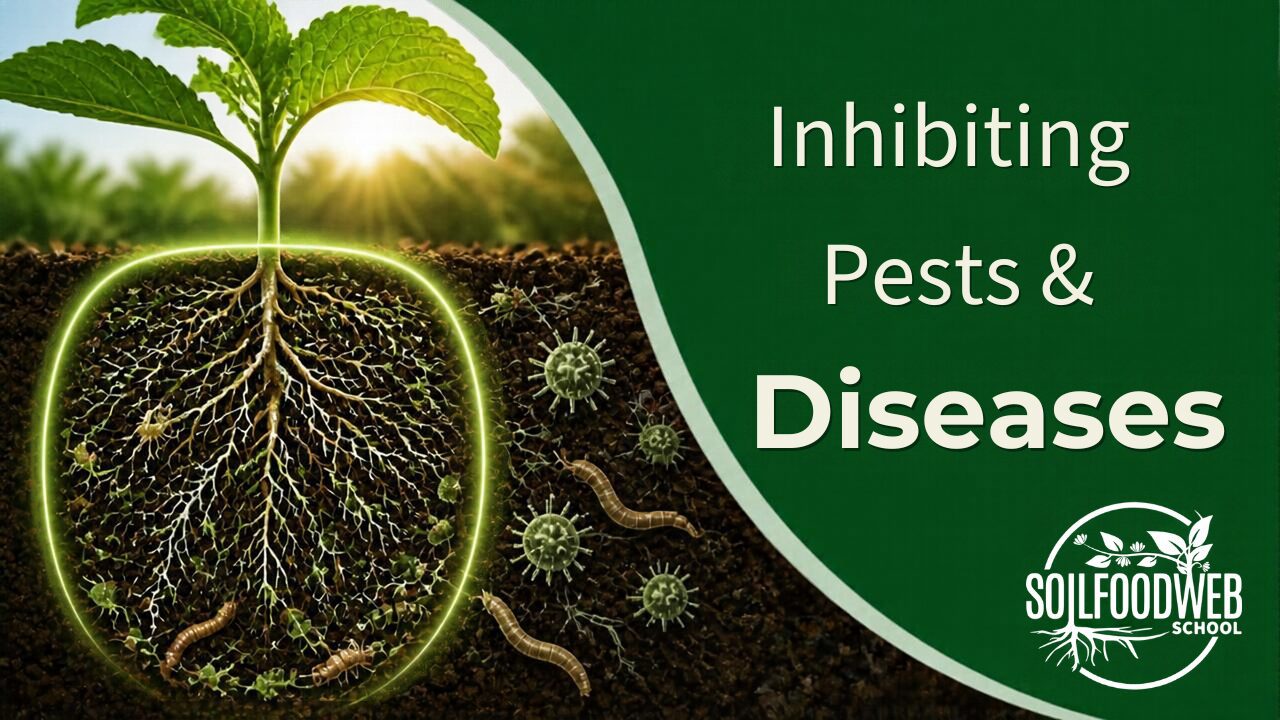
Beneficial bacteria produce glues that bind soil particles into microaggregates; fungal hyphae weave those into larger macroaggregates. The result behaves like a sponge — holding water for extended periods, letting air flow in, resisting erosion by wind and rain, and reducing the need for irrigation.
Sequestering carbon, avoiding emissions
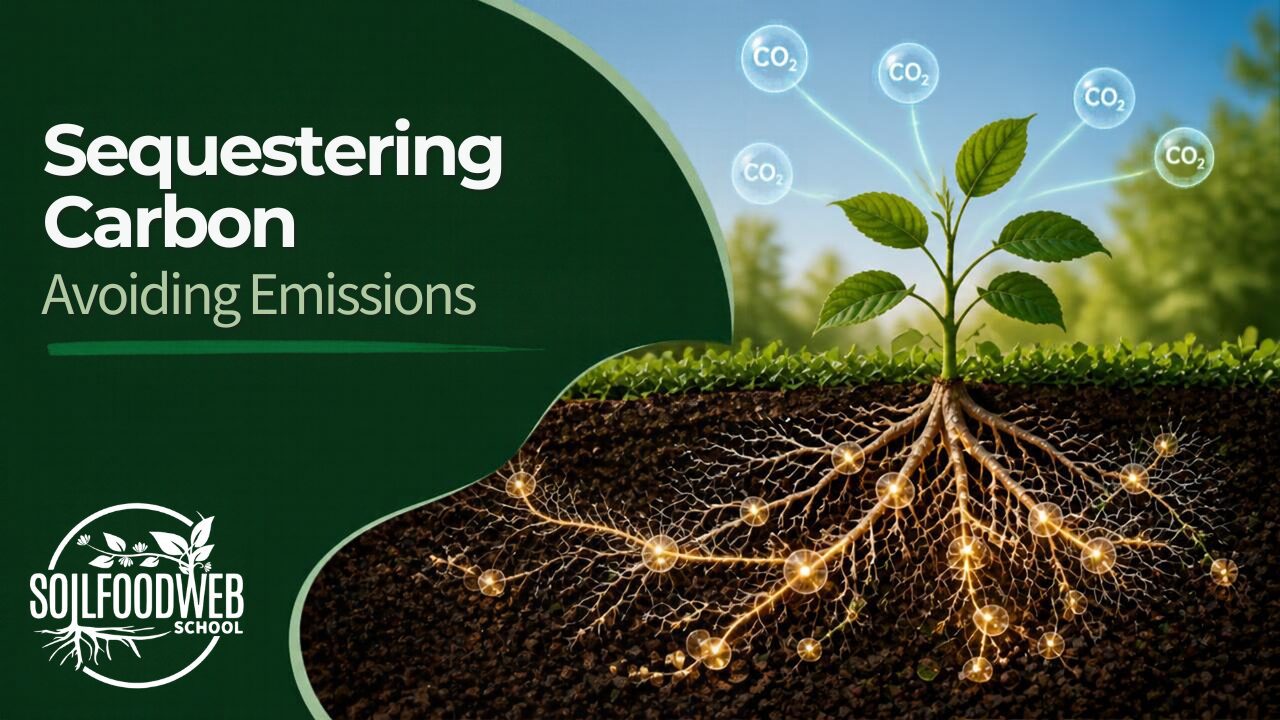
Plants pull carbon from the atmosphere and invest much of it into the soil, where it is built into microbial bodies, soil aggregates, and long-lived fungal networks. Biological management also avoids emissions at the source: less synthetic fertilizer to manufacture and transport, and fewer fuel-intensive passes over the field.
From science to practice
Deepen your understanding and create impact in your own context through our educational programs.
Soil food web in action
Case studies & videos
The Soil Food Web Approach has proven effective on six continents (there’s not much soil in Antarctica!). Visit our case study library to see how it is already being used to transform soil in any climate and at any scale, from massive farms to small market gardens.